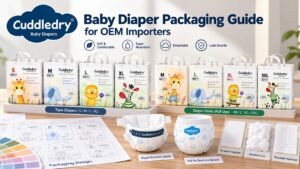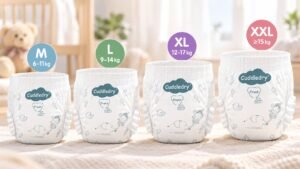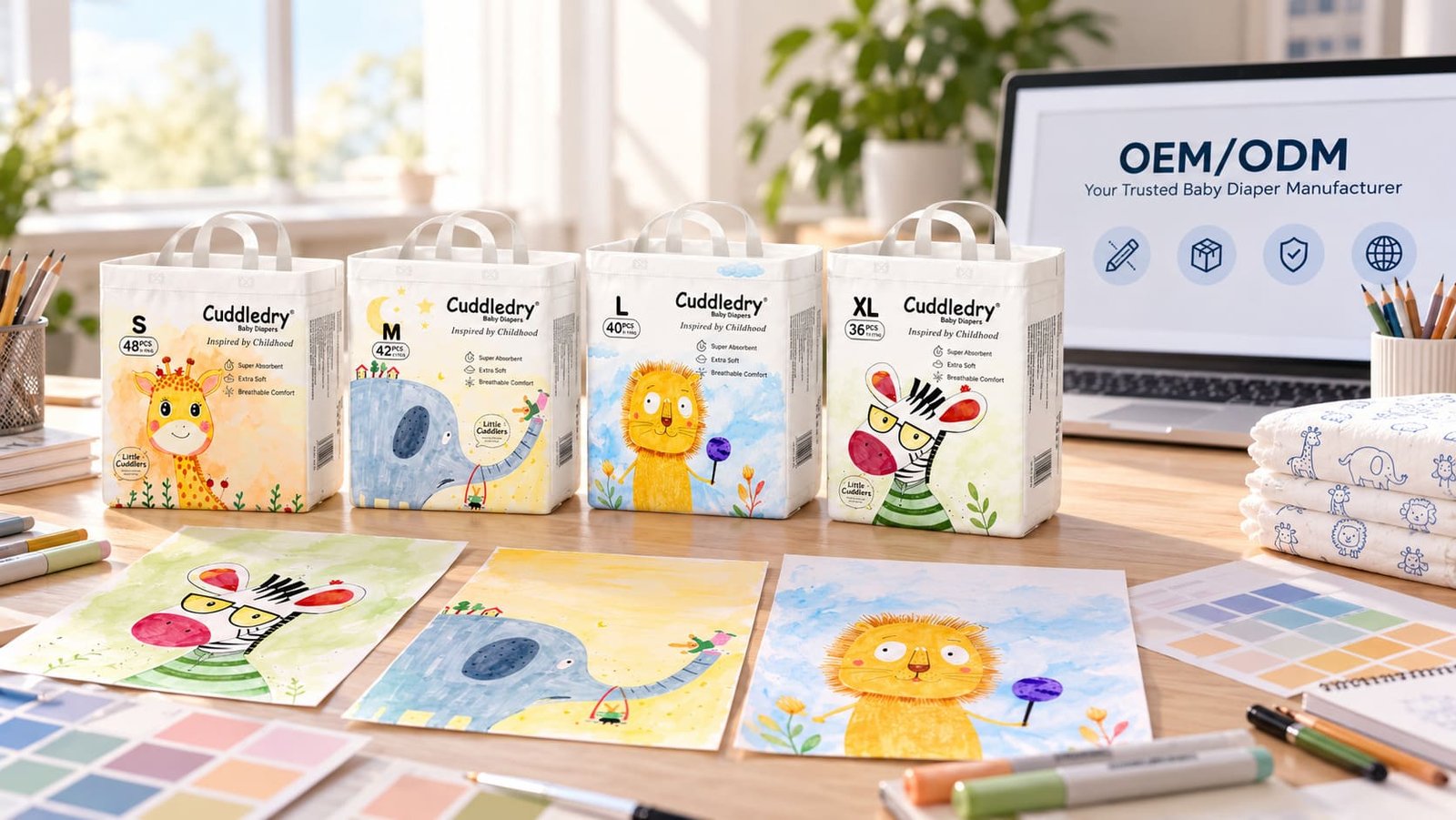
Starting your own baby diaper brand can be an exciting business opportunity, but creating a successful brand requires much more than simply putting your logo on a diaper package. Before launching, you need to understand your target market, determine the right product specifications, select a reliable manufacturer, develop your packaging, calculate your costs and establish a realistic sales strategy. If you want to start a baby diaper brand, this guide walks you through the major steps from initial market research to mass production and launch.
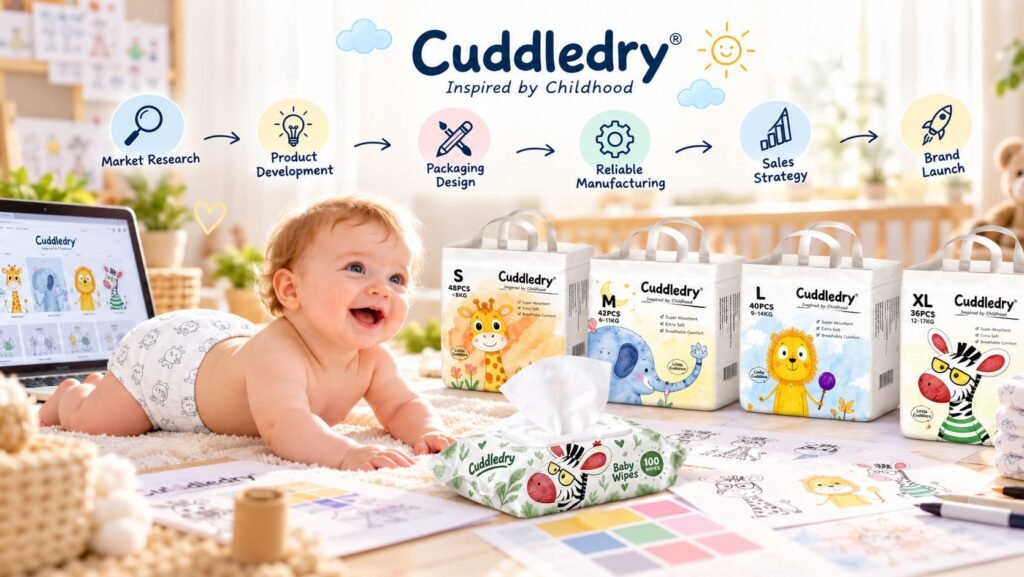
1. Research Your Target Market First
One of the biggest mistakes new diaper brands make is developing the product before fully understanding the market. A diaper that performs well in one country may not necessarily be the best product for another market. Before discussing specifications with a manufacturer, research your target customers. Consider questions such as:
- Who will buy your diapers?
- What price range is acceptable?
- Which diaper brands currently dominate the market?
- What sizes sell the most?
- Are consumers more interested in affordability or premium features?
- Do parents prefer tape diapers or pull-up pants?
- Where will your diapers be sold?
- What pack sizes are common in local stores?
For example, a diaper developed for supermarkets in a highly price-sensitive market may need a very different product structure from a premium diaper sold through pharmacies or online stores. Your product should therefore begin with the market, not with the factory.
2. Decide Your Brand Positioning
Once you understand your market, decide where your new diaper brand should be positioned. Most baby diaper brands fall broadly into three categories.
Economy
Economy diapers focus heavily on affordability. They usually use simpler product structures and are often designed for high-volume wholesale, traditional retail and price-sensitive markets.
Mid-Range
Mid-range diapers aim to balance performance, comfort and price. This is often a practical positioning for new brands because it allows you to provide good product performance while keeping the retail price competitive.
Premium
Premium diapers may focus on features such as:
- Extra softness
- Ultra-thin absorbent cores
- Premium nonwoven materials
- Improved breathability
- Higher SAP content
- Advanced acquisition layers
- Premium elastic systems
- Wetness indicators
- Special backsheet designs
- Natural or plant-inspired materials
Premium positioning can provide higher margins, but your packaging, branding and marketing also need to support the premium image. Your manufacturer should understand your positioning before recommending a product specification.
3. Choose the Right Type of Baby Diaper
The next step is deciding which diaper products your brand will offer. The two major categories are:
Baby Tape Diapers
Tape diapers are widely used for newborns and younger babies. They are easy for parents to adjust and are available in a wide range of sizes.
Baby Pull-Up Pants
Pull-up diapers are especially convenient for active babies and toddlers. They are worn more like underwear and can be easier to change when children become more active. Some brands launch both product categories at the same time, while others begin with tape diapers and expand into pull-up pants later. If you are launching a new brand with a limited initial budget, it may be better to start with a carefully selected product range rather than too many SKUs.
4. Determine Your Size Range
Baby diaper sizing varies between markets and manufacturers. A typical range may include: NB, S, M, L, XL and XXL. However, you do not necessarily need every size when launching your brand. Look at the most popular sizes in your market and discuss expected sales ratios with your distributor or retail partners.
For example, if certain sizes represent only a very small percentage of your expected sales, launching them immediately may increase inventory complexity unnecessarily.
This is especially important because every additional size may affect:
- Packaging quantity
- MOQ
- Inventory requirements
- Production planning
- Container configuration
A focused size range can make your first order easier to manage.
5. Develop Your Baby Diaper Specification
This is one of the most important stages when you start a baby diaper brand. Two diapers can look almost identical but perform very differently. You should discuss the complete product structure with your manufacturer. Important components include:
Topsheet
The topsheet is the layer that touches the baby’s skin. It should feel soft and allow liquid to pass quickly into the absorbent core.
Acquisition Distribution Layer
The ADL helps distribute liquid across the absorbent core instead of allowing it to remain concentrated in one area.
SAP
Super Absorbent Polymer, or SAP, absorbs and retains liquid inside the diaper.
Fluff Pulp
Fluff pulp works together with SAP to help absorb and distribute liquid.
Backsheet
The backsheet helps prevent leakage while contributing to the diaper’s softness and breathability.
Elastic Components
Leg elastics, waist elastics and side panels affect fit and leakage protection.
Fastening System
For tape diapers, the frontal tape and side tapes should provide secure but comfortable fastening.
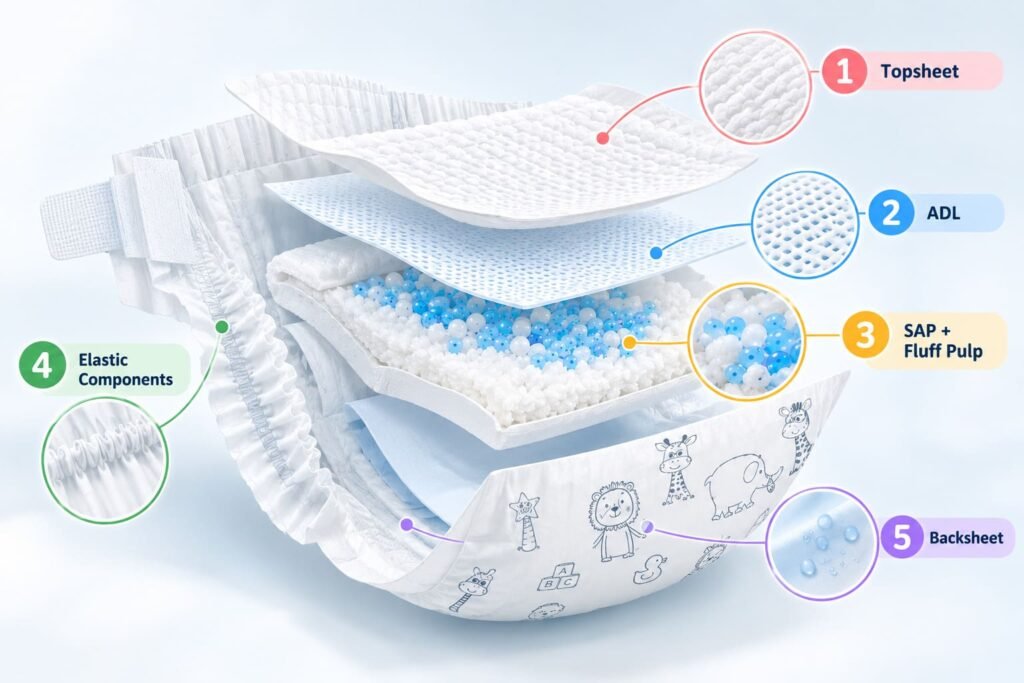
Your manufacturer should be able to explain how changing these materials affects both performance and cost.
6. Don’t Simply Choose the Most Absorbent Diaper
New buyers sometimes assume that more absorption automatically means a better diaper. It does not. A successful diaper needs to balance several performance factors:
- Absorption speed
- Liquid retention
- Rewet performance
- Liquid distribution
- Leakage protection
- Fit
- Softness
- Breathability
- Thickness
For example, increasing SAP may improve laboratory absorption capacity, but this alone does not guarantee better real-world performance. The overall structure of the diaper matters. This is why product development should focus on balanced performance, rather than a single impressive specification.
7. Request Samples and Test Them
Never finalize your baby diaper specification based only on a quotation or specification sheet. Request physical samples.
Evaluate:
- Overall appearance
- Softness
- Thickness
- Elasticity
- Tape strength
- Waist fit
- Absorption speed
- Rewet
- Leakage protection
- Odor
- Construction quality
You can also compare samples from several manufacturers side by side.
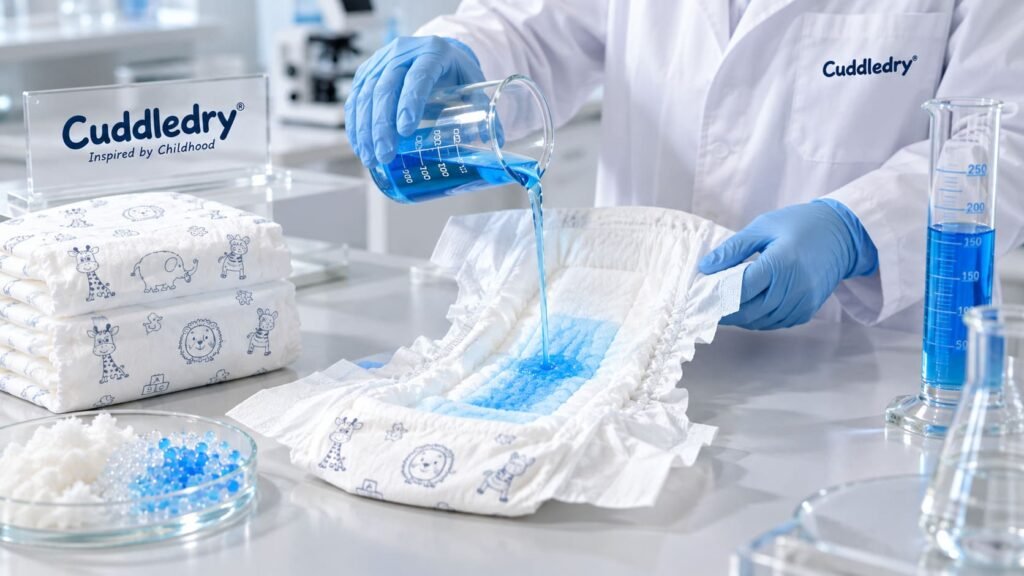
If possible, conduct both laboratory testing and actual user trials before approving the final product. A diaper that performs well in a simple absorption demonstration may behave differently during several hours of actual use.
8. Create Your Brand Name and Visual Identity
Once your product positioning is clear, you can develop your brand identity. Your brand should be easy for consumers to recognize and remember. You will normally need:
- Brand name
- Logo
- Brand colors
- Product design
- Packaging design
- Size identification system
- Product claims
- Marketing message
Before investing heavily in packaging, check whether your intended brand name can be legally used and registered in your target market. This is particularly important if you plan to build the brand long term.
9. Design Your Diaper Packaging
Packaging plays an important role in the diaper business. Consumers often see the packaging before they ever touch the diaper itself. Your packaging should communicate:
- Brand positioning
- Product size
- Baby weight range
- Pack quantity
- Key product benefits
- Usage information
- Manufacturer/importer information
- Required regulatory information
- Make sure important information can be understood quickly.
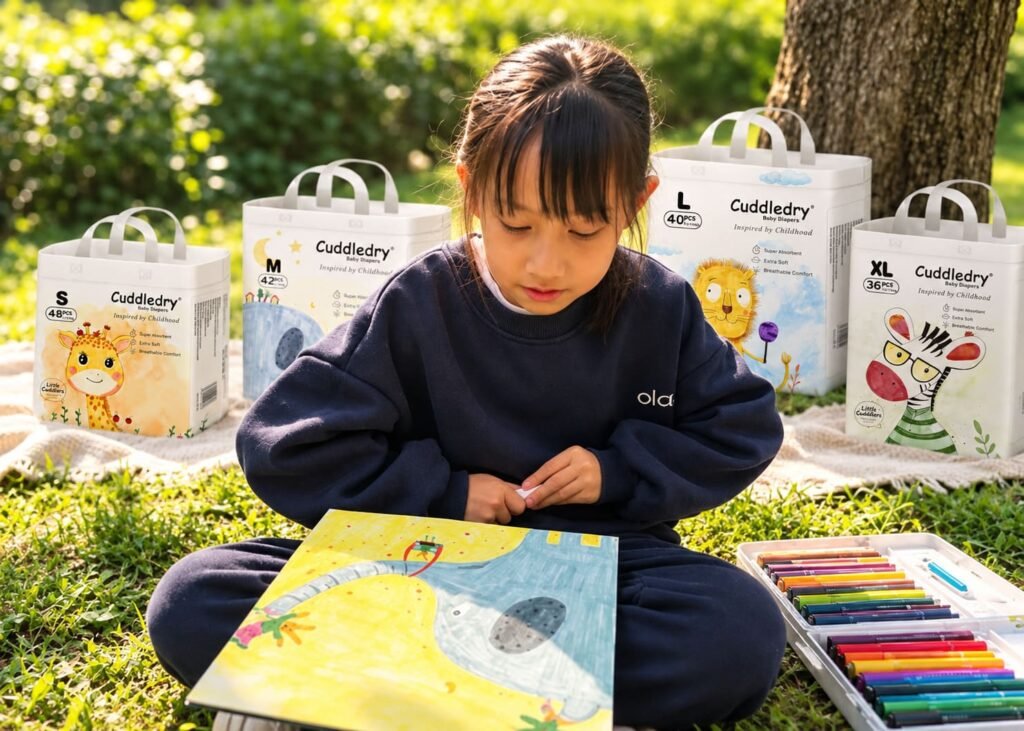
Packaging should not only look attractive. It also needs to work commercially.
10. Think About Pack Quantity and Container Loading
This is an area many first-time diaper importers overlook. Imagine two packages containing the same diaper. One package is unnecessarily large, while the other is compact and efficiently packed. The larger package may look impressive, but fewer packs will fit into a shipping container. That increases the freight cost per diaper. When developing packaging, ask your manufacturer to calculate:
- Pieces per pack
- Packs per bale or carton
- Package dimensions
- CBM
- Packs per 40HQ container
- Total pieces per container
For international diaper businesses, packaging design and logistics should be considered together.
11. Understand the Manufacturer’s MOQ
MOQ means Minimum Order Quantity. Before finalizing your packaging artwork, ask the manufacturer about MOQ requirements. MOQ may depend on:
- Number of sizes
- Diaper specification
- Printed backsheet design
- Packaging material
- Number of packs per size
- Production-line requirements
- Raw-material purchasing requirements
A common mistake is creating six sizes with completely different packaging before confirming whether the initial order quantity can support all six SKUs. Discuss MOQ early. It can save a lot of redesign work later.
12. Choose a Reliable OEM Baby Diaper Manufacturer
Your manufacturer is one of the most important partners in your business. Do not evaluate a supplier only by price.
Consider:
- Manufacturing experience
- Production equipment
- Quality-control system
- Raw-material suppliers
- OEM experience
- Export experience
- Communication
- Sample-development capability
- Packaging support
- Production capacity
- Delivery reliability
A good manufacturer should be willing to discuss your target market rather than immediately offering the cheapest possible diaper. If you are looking for a reliable baby diaper manufacturer in China, it is important to evaluate the factory’s production capabilities, quality-control procedures, OEM services and export experience before making your decision.
13. Calculate Your Real Landed Cost
The factory price is not your final product cost. Your landed cost may include:
- Product cost
- Packaging
- Inland transportation
- Export charges
- Ocean freight
- Insurance
- Import duty
- VAT or other taxes
- Customs clearance
- Warehousing
- Local transportation
Calculate these costs before deciding your wholesale and retail prices.
For example:
Factory Cost + Logistics + Import Costs = Landed Cost
Then consider:
Landed Cost + Distributor Margin + Retailer Margin + Marketing Cost + Profit = Retail Price
A product can have an attractive factory price but still be commercially uncompetitive after logistics and distribution costs are included.
14. Check Import and Regulatory Requirements
Every country has different requirements for imported hygiene products. Before production, confirm the regulations applicable in your target market. Depending on the country, you may need documentation related to:
- Product safety
- Raw materials
- Labeling
- Manufacturer information
- Import registration
- Testing
- Certificates
- Country of origin
Do not wait until the container is ready to investigate import requirements. Your importer, customs broker and relevant government authorities should confirm the requirements before mass production.
15. Approve a Final Pre-Production Sample
Before mass production begins, confirm the final version of:
- Diaper structure
- Size
- Weight
- Materials
- Absorbency
- Printing
- Packaging
- Pack quantity
- Carton or bale configuration
Keep an approved reference sample whenever possible. This gives both the buyer and manufacturer a clear benchmark for mass production.
16. Prepare Your Sales Channels Before the Goods Arrive
Do not wait until your container arrives before thinking about sales. Your sales strategy should begin during product development.
Possible channels include:
- Distributors
- Wholesalers
- Supermarkets
- Pharmacies
- Baby stores
- E-commerce
- Social media
- Hospitals
- Maternity clinics
Different sales channels may also require different pack quantities. For example, an e-commerce pack may be different from a traditional wholesale pack. Understanding your sales channels early can therefore influence packaging and product development.
17. Start With a Focused Product Range
Many new brands want to launch too many products immediately. More products can appear impressive, but they also create more inventory, more packaging, more capital requirements and more operational complexity. It is often better to launch with a focused range of strong products. Once you understand which sizes and products sell best, you can expand into:
- Pull-up pants
- Premium diaper ranges
- Economy ranges
- Baby wipes
- Underpads
- Other baby-care products
Build the range based on actual market demand.
18. Build a Long-Term Relationship With Your Manufacturer
Starting a baby diaper brand is not a one-order project. As your brand grows, you may need to:
- Improve product specifications
- Develop new sizes
- Introduce new packaging
- Reduce costs
- Increase container efficiency
- Add new products
- Respond to consumer feedback
A reliable manufacturing partner should be able to support this development. The goal should not simply be to purchase diapers. The goal is to build a product that can compete and grow in your market.
How Cuddledry Can Support Your Baby Diaper Brand
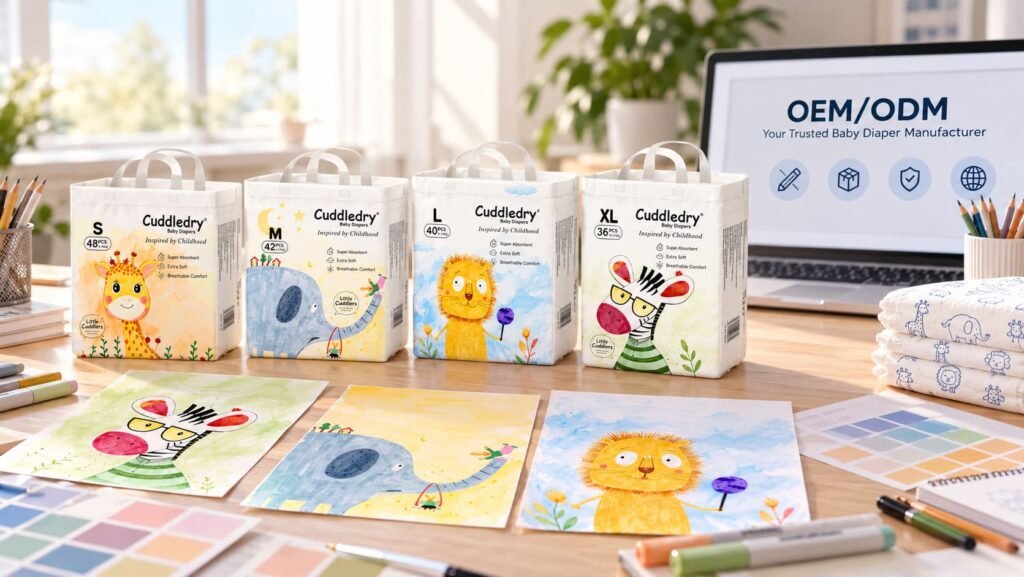
Cuddledry provides OEM and private-label baby diaper solutions for importers, distributors and brand owners. Depending on your market requirements, we can discuss:
- Baby tape diapers
- Baby pull-up pants
- Different absorbency levels
- Material options
- Customized diaper designs
- Private-label packaging
- Size ranges
- Pack quantities
- Container-loading solutions
- Sample development
Our approach is to first understand your market, positioning and target price, and then discuss a suitable product structure.
Start Your Baby Diaper Project
If you are planning to start a baby diaper brand, the first step is not choosing a package design. It is understanding your market and developing the right product for your customers. Once you know:
Your market → Your positioning → Your target price → Your product specification
the rest of the project becomes much easier to manage. CuddleDry can work with you from product selection and sample development through packaging, production and container planning.
Frequently Asked Questions
How much does it cost to start a baby diaper brand?
The required investment depends on your product specification, number of sizes, packaging, MOQ, shipping cost and target market. Instead of looking only at the factory price, calculate the complete landed cost and working capital required for your first order.
Can I put my own brand on baby diapers?
Yes. OEM and private-label diaper manufacturers can produce diapers and packaging under your own brand, subject to the manufacturer’s customization and MOQ requirements.
What is the MOQ for private-label baby diapers?
MOQ varies between manufacturers and can also depend on the number of sizes, packaging design, diaper specification and printing requirements. Confirm the MOQ before completing your packaging artwork.
Should I start with tape diapers or pull-up pants?
This depends on your target consumers and market. Tape diapers are widely used for younger babies, while pull-up pants are particularly convenient for active babies and toddlers. Some brands launch both, while others begin with a smaller range.
How do I choose a baby diaper manufacturer?
Evaluate product quality, materials, production capability, quality control, OEM experience, export experience, MOQ, communication and after-sales support—not just price.